Automation Testing vs Manual Testing: Which One Will Save Your QA Team’s Sanity in 2025?
By Rupesh Dhirwani ·
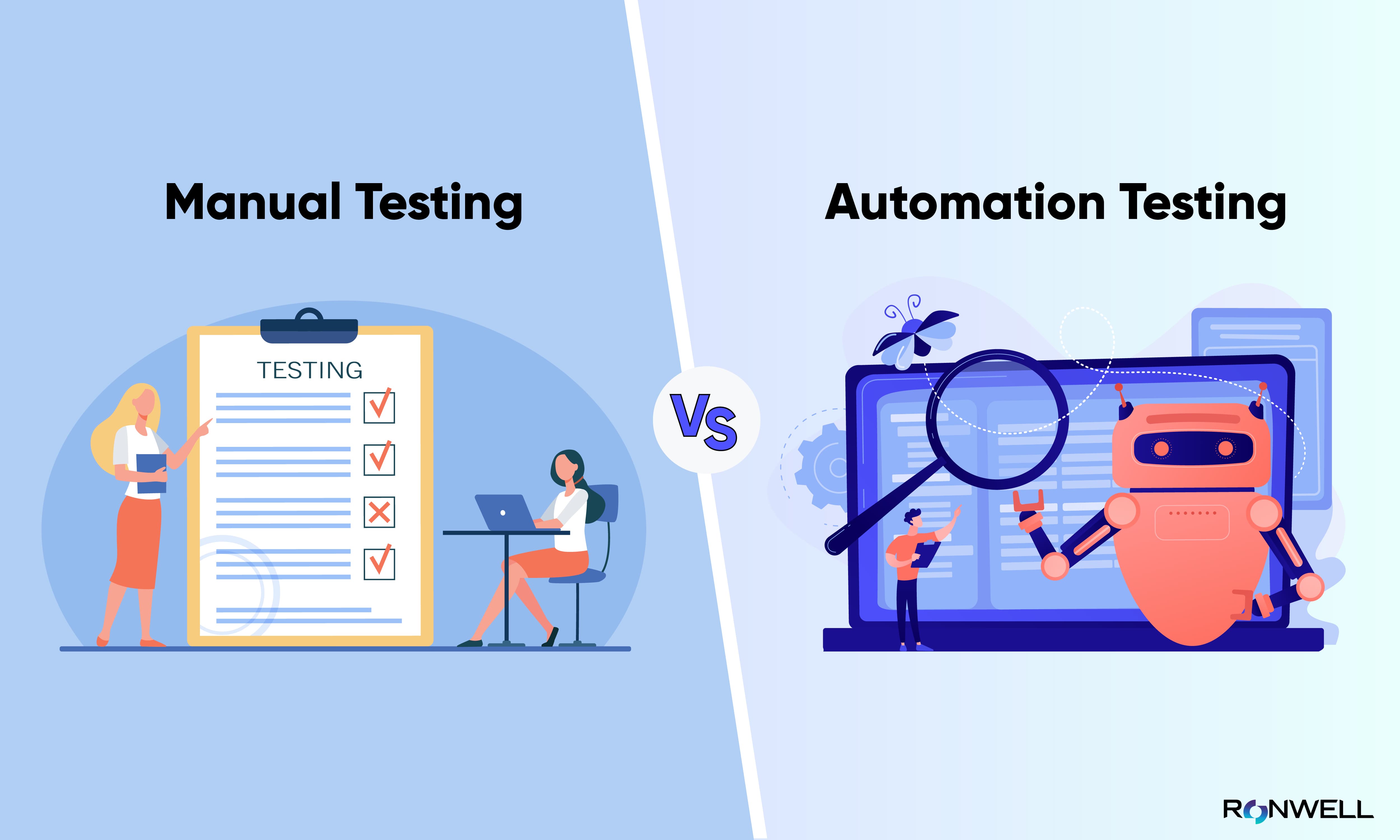
Assume that you're a chef preparing a five-course meal. Would you chop every ingredient by hand or use a high-speed food processor to save time and effort? That’s exactly the kind of choice QA teams face in software testing: Manual Testing vs Automation Testing. In today's fast-paced Agile and DevOps world, striking the right balance between manual and automated testing is not just a best practice and it’s a survival strategy. In this blog, we break down the differences, pros, cons and modern use cases of each approach, so your QA team stays sane and efficient.
What is Manual Testing?
Manual Testing is the process of executing test cases by hand without using automation tools. Think of it as a detective methodically analyzing every clue it’s meticulous, flexible, and ideal when human intuition is needed.
🔍 BEST FOR:
1. Exploratory Testing
2. Usability and Accessibility Testing
3. Ad-hoc and One-Time Scenarios
💡 Real-Life Example:
You’re testing a new e-commerce app. A manual tester clicks the “Add to Cart” button—not only verifying that it works but also noticing that the button is too small on mobile screens. These UX insights are often missed by automated tests.
💡 Pro Tip: Manual testing is like handcrafting sushi, it requires a human touch, attention to detail, and adaptability.
What is Automation Testing?
Automation Testing involves using specialized tools and scripts to execute test cases automatically. It’s like having a tireless robot chef following a recipe with precision and speed.
⚙️ BEST FOR:
1. Regression Testing
2. Performance and Load Testing
3. Continuous Integration/Continuous Deployment (CI/CD)
4. Data-Driven Testing
Real-Life Example:
Imagine a banking app that rolls out updates every sprint. Manually repeating hundreds of test cases becomes exhausting. Automation ensures quick, consistent, and accurate regression checks—critical for fintech reliability.
💡 Pro Tip: Automation testing is your kitchen robot—efficient, scalable, and ideal for repetitive tasks.
🧠 Manual Testing vs Automation Testing: When to Use Each?
Use Case Manual Testing Automation Testing Exploratory Testing Best suited Lacks adaptability Regression Testing Time-consuming Fast and reliable Usability Testing Captures real human feedback Can't detect visual/UI issues well Performance Testing Not scalable Handles thousands of simulated users One-Off or Short Projects Quick setup Setup overhead not worth the effort CI/CD Environments Too slow Enables seamless DevOps pipelines
🎧 Case Study: How Spotify Balances Manual and Automated Testing
Spotify uses a hybrid testing strategy—manual testers focus on new features, UX, and real-user scenarios, while automation scripts run regression tests across devices, OS versions, and edge cases. This balance lets them ship fast without sacrificing quality.
🔥 Manual vs Automation Testing: Key Differences in 2025
Use Case Manual Testing Automation Testing Execution Speed Slower, human-paced High-speed, script-driven Cost Lower upfront, high long-term for large projects Higher upfront, cost-effective at scale Flexibility Extremely adaptive Rigid unless scripts are updated Accuracy Subject to human error Highly reliable and consistent Setup Time Quick and easy Requires planning, tools, and scripting Human Insight High – ideal for user experience validation Limited – focused on pass/fail logic
🧩 Challenges in Manual & Automation Testing
📌 Manual Testing Challenges:
- Time-intensive for large-scale applications
- Inconsistent results due to human variability
- Difficult to scale for Agile/CI environments
🤖 Automation Testing Challenges:
- High initial investment in tools and training
- Limited to predefined test scripts
- Maintenance overhead with frequent app changes
Balancing both approaches based on project needs is key to achieving fast, reliable, and user-focused QA outcomes.
Conclusion: Why a Balanced Testing Strategy is a Game-Changer
In the automation vs manual testing debate, there’s no silver bullet. Manual testing excels in areas where human intuition and UX insights are critical. Automation testing is your best friend for repetitive tasks, large datasets, and continuous integration workflows.
🧠 The smartest QA teams in 2025 are not choosing one over the other—they're building hybrid testing strategies that maximize the strengths of both.
So whether you're a QA lead, software tester, or product owner, remember: even the best chefs know when to sharpen the knife—and when to plug in the food processor.